Landowner benefits |
Town benefits |
State benefits |
Public benefits |
Working land
Working Open Space Land
Not all open space land is inactive!
Farming and the Wood Products industry depend on Current Use for economic viability-both
depend upon fair land taxes! These industries play an essential role in preserving
New Hampshire's rural character. Working open space land creates jobs and produces
goods, which generate income. Supporting research includes the Business & Industry
Association of New Hampshire's 1998 Economic Opportunity Index, that noted the
working landscape used for farming and forestry contributes to economic opportunity
while maintaining open space valued by state residents. Not to mention tourists,
who flock to New Hampshire to enjoy our rugged, rural scenery.

Photo by New Hampshire Timber Owners Association |
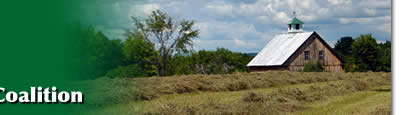
Whether a farm is growing apples or producing milk it requires land
to produce the final product. When we are enjoying the view of a beautiful
field, most of us don't realize that it may be a source of income for
the landowner. And we don't often recognize the work involved to create
that field, or to maintain it as a field. If the owner stops mowing
a field it will return to forest. Many of New Hampshire's scenic vistas
are visible because the forest was cleared and a field was created
and maintained.
Second only to Maine, New Hampshire is the most tree covered state in the nation,
and our wood products industry is evidence of that abundant resource. Wood products
begin with trees harvested from New Hampshire forests. That wood is turned into
many things, including paper, buildings, furniture, and electricity from power
plants that are fueled by woodchips.
A forest is not merely trees growing; it is at work, growing a valuable renewable
resource and providing habitat for New Hampshire's abundant wildlife. Many current
use landowners manage their forest land for timber as a crop. Timber can be a
source of revenue for the landowners, and many speak of the deep satisfaction
they derive from improving their forest. The Tree Farm program encourages private
landowners to manage their forest land as a sustainable, renewable resource;
not only to improve the quality of the trees that are growing, but to protect
and enhance water quality and wildlife habitat.
Do you enjoy locally grown produce? Do you have a family tradition of visiting
a pick-your-own-strawberry field, or cutting your own Christmas tree? Are you
a fan of real maple syrup? You can thank Current Use for all of them!
|